
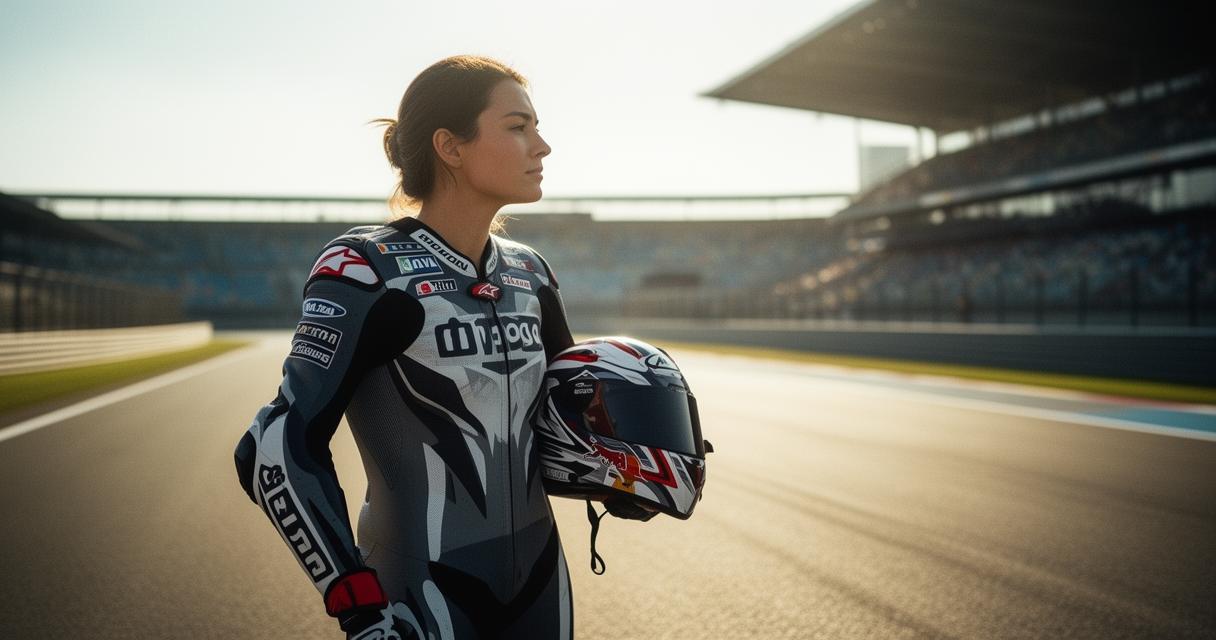
In the world of elite motorcycle racing, where speed and precision merge with courage and determination, few stories resonate as powerfully as that of Maria Herrera. This Spanish rider has spent more than a decade carving her name into the annals of motorsport history, not merely as a competitor but as a beacon of possibility for countless women who dream of commanding powerful machines on the world's most demanding circuits. Her journey from a small town near Madrid to the podiums of international championships has become a catalyst for change, inspiring modern training programmes dedicated to nurturing female talent and challenging the traditional boundaries of a sport long dominated by men.
Breaking barriers: maria herrera's trailblazing journey in championship racing
From spanish circuits to international recognition
Born on the twenty-sixth of August in nineteen ninety-six in Madrid, Maria Herrera discovered her passion for motorcycling at an extraordinarily young age. At just six years old, she climbed aboard a Polini minibike, encouraged by her father and brothers who recognized her innate enthusiasm for speed and competition. That first race proved to be a defining moment, not only because she won and earned thirty euros, but because it ignited a lifelong commitment to the sport. Growing up in Oropesa, a town in Toledo, she found herself surrounded by a supportive family who nurtured her ambitions even as the world of motorcycle racing remained overwhelmingly male-oriented.
Her early years were marked by rigorous training and shared sessions with double WorldSBK champion Alvaro Bautista, whose influence helped shape her competitive edge and technical understanding. By two thousand and thirteen, Maria Herrera had already made history as the first female winner in the FIM CEV Repsol series, a milestone that signalled the arrival of a formidable talent. This achievement was not merely symbolic; it demonstrated that women could compete at the highest levels of motorcycle racing and win on merit, skill, and determination. Her debut in a full-season Moto3 campaign came in two thousand and fifteen, riding for Husqvarna, where she recorded her best result of eleventh place at the Australian Grand Prix. These early successes laid the foundation for a career that would span over sixty MotoE races and fifty-four Grands Prix in Moto3, establishing her as a respected and resilient competitor.
Competing Against the Odds in a Male-Dominated Sport
The path Maria Herrera carved through championship racing was rarely straightforward. After her initial Moto3 campaigns with AGR Team from two thousand and sixteen to two thousand and seventeen, she transitioned to WorldSSP300 in two thousand and eighteen, where she finished thirteenth overall with forty-five points and achieved a best result of fourth place. The move to the FIM Enel MotoE World Cup in two thousand and nineteen marked another chapter in her professional journey, one that would test her resolve and adaptability. Despite facing setbacks during the two thousand and twenty and two thousand and twenty-one campaigns, she persevered, demonstrating the resilience and perseverance she credits to lessons learned from overcoming a back injury earlier in her career.
Her participation as a wildcard in the Moto3 Aragon Grand Prix in two thousand and twenty-two, riding for an all-female team, underscored her commitment to promoting diversity and representation in motorsport. By two thousand and twenty-three, she had secured a top ten finish in the MotoE standings, finishing sixteenth overall but showing consistent improvement. Now competing in her sixth consecutive season in the MotoE championship with the Klint Forward Factory Team aboard a Ducati, Maria Herrera continues to push boundaries and challenge expectations. Standing at one hundred and sixty-three centimetres and weighing fifty-seven kilogrammes, she exemplifies the notion that physical stature is no barrier to elite performance when matched with technical skill, mental fortitude, and an unwavering belief in one's abilities.
The herrera effect: how one rider's determination transformed women's motorcycling training
Inspiring a New Generation of Female Motorcyclists Through Representation
The significance of Maria Herrera's career extends far beyond race results and championship standings. Her presence on the starting grid of elite competitions has served as a powerful form of representation, offering young girls and women a tangible example of what is possible in a sport traditionally dominated by men. Visibility matters profoundly in motorsport, where the absence of female role models can discourage aspiring riders from pursuing their dreams. Maria's achievements have helped dismantle these psychological barriers, proving that women can compete at the highest levels and earn respect through performance and dedication.
This visibility has directly influenced the development of modern training programmes designed specifically for female riders. Recognising the unique challenges women face in entering and progressing within motorcycling, organisations and coaches have increasingly tailored their approaches to address these needs. Maria herself has become an active promoter and coach of female riding talent, conducting training courses for girls aged five to fifty. These programmes emphasise not only the technical aspects of riding but also the values of respect, perseverance, and pushing personal limits. By sharing her own experiences and insights, she provides mentorship that goes beyond instruction, fostering a supportive community where women can develop their skills with confidence.
Modern training programmes shaped by maria's racing philosophy
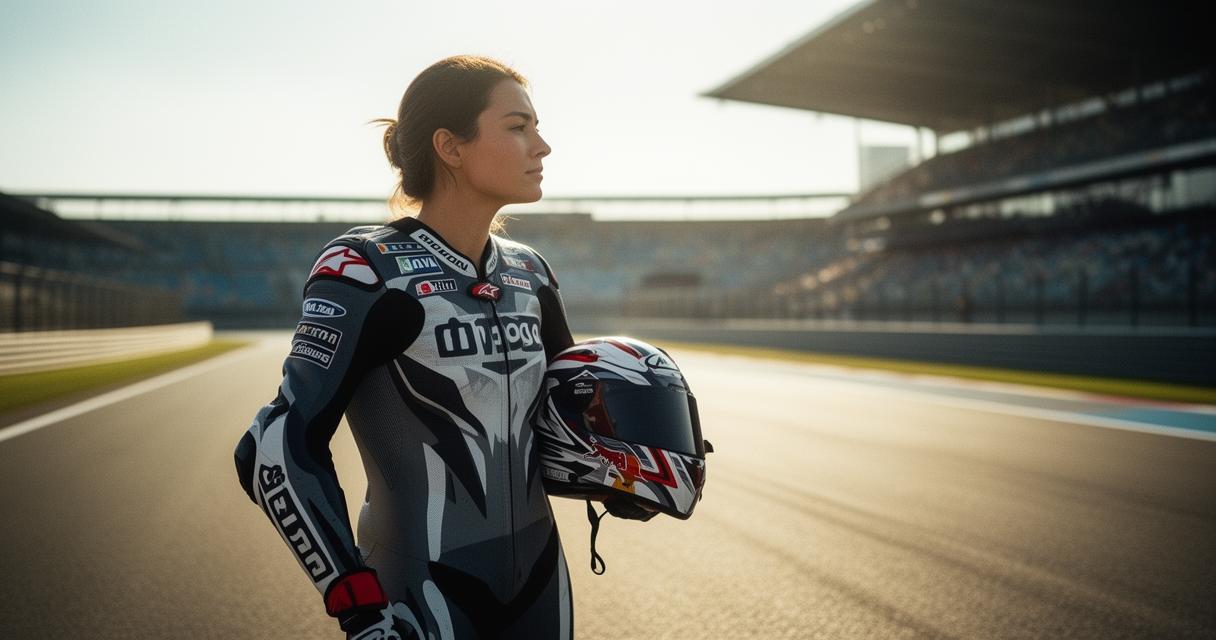
The principles that have guided Maria Herrera's career have become foundational to contemporary training initiatives aimed at women riders. Her philosophy emphasises resilience, the importance of starting young, and the value of consistent practice and exposure to competitive environments. Training programmes inspired by her journey often incorporate structured pathways that allow young female riders to progress from basic skills through to competitive racing, mirroring the trajectory that took Maria from a Polini minibike to the MotoE championship.
These modern programmes also recognise the importance of holistic development. Maria's own fitness regime includes road and mountain biking, swimming, skiing, and football, activities that contribute to her overall physical conditioning and mental sharpness. Training courses for women increasingly incorporate cross-training elements, understanding that a well-rounded athletic foundation enhances performance on the motorcycle. Furthermore, the emphasis on creating inclusive environments where female riders can train together fosters camaraderie and mutual support, countering the isolation that can occur in a male-dominated sport. By integrating these elements, modern training programmes not only develop technical riding skills but also build the confidence and resilience necessary for long-term success in motorsport.
Beyond the Track: Maria Herrera's Advocacy for Equal Opportunities in Motorsport
Championing women's participation in fim-sanctioned events
Maria Herrera's influence extends into advocacy, where she has consistently championed the cause of equal opportunities and representation within FIM-sanctioned events and beyond. Her participation in diverse championships, from Moto3 Grand Prix to WorldSSP300 and MotoE, demonstrates her versatility and commitment to breaking down barriers at every level of the sport. By competing in these varied disciplines, she has drawn attention to the capabilities of female riders and highlighted the need for continued support and investment in women's motorsport.
Her involvement in initiatives such as the all-female team wildcard entry at the Aragon Grand Prix exemplifies her dedication to promoting women's participation. These efforts have helped shift the conversation within the motorcycling community, encouraging organisers, sponsors, and teams to consider how they can better support and nurture female talent. The growing presence of women in racing series such as WorldWCR, where Maria is recognised as one of the top competitors, reflects the gradual but meaningful progress being made. Her advocacy underscores the importance of systemic change, from grassroots training to professional opportunities, ensuring that talented female riders have the pathways and resources necessary to realise their potential.
The Legacy of a Respected Personality in Motorcycling Culture
Beyond her achievements on the track, Maria Herrera has cultivated a legacy as a respected personality within motorcycling culture. Her father remains a key influence in her life, instilling values that have guided her through the highs and lows of a professional racing career. These values of dedication, humility, and perseverance resonate throughout her work as a coach and mentor, shaping the next generation of female motorcyclists. Her hobbies, including painting animals, reveal a multifaceted individual whose interests and passions extend beyond racing, humanising her story and making her an even more relatable figure for aspiring riders.
The impact of Maria Herrera's career is evident in the increasing number of training programmes, mentorship initiatives, and competitive opportunities now available to women in motorcycling. Her story serves as a reminder that progress in sport is often driven by pioneers who are willing to challenge conventions and inspire others through their actions. As she continues to compete in the MotoE championship and work towards further improving her performance in the coming years, Maria's influence will undoubtedly persist, shaping the future of women's motorcycling and ensuring that the barriers she has broken remain dismantled for generations to come. Her journey from a young girl on a minibike in Oropesa to a respected figure in elite motorsport encapsulates the transformative power of determination, representation, and a relentless pursuit of excellence.