

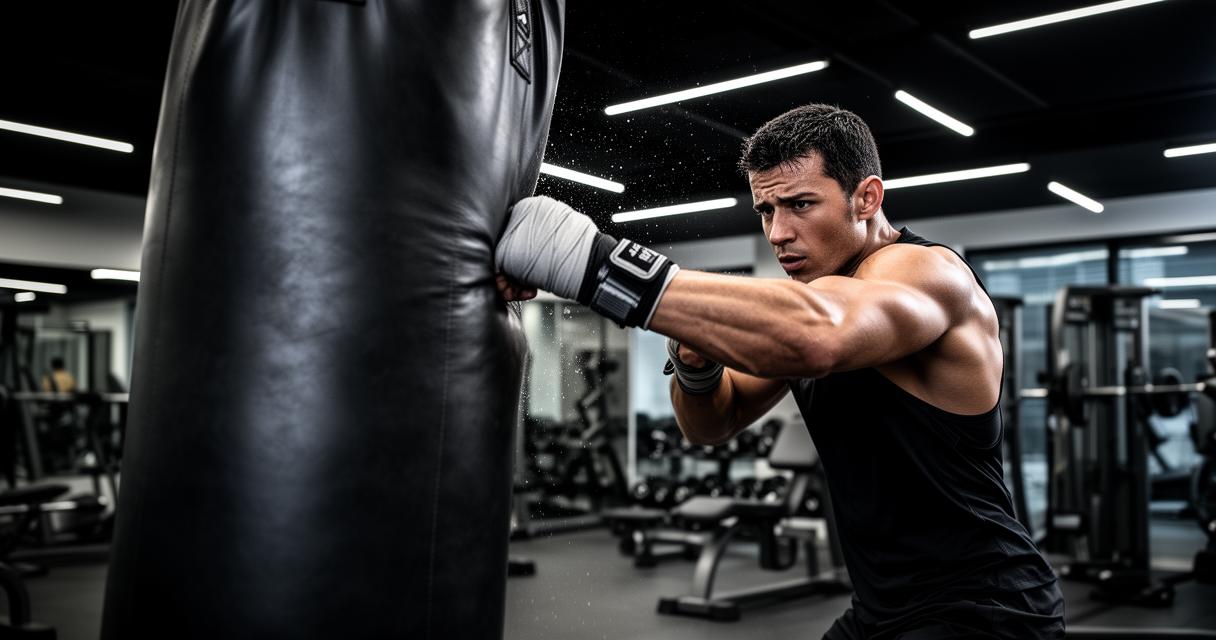
The heavy bag stands as an enduring symbol of boxing training, offering a robust platform for developing power, refining technique and building the endurance that defines a true athlete. Whether you are stepping into the gym for the first time or honing advanced skills, training on the bag provides an unparalleled opportunity to transform raw energy into controlled strength. Beyond the immediate physical benefits, this form of training cultivates mental discipline and fosters sustainable fitness habits that extend far beyond the confines of the ring. Engaging regularly with the bag not only enhances your boxing skills but also elevates cardiovascular fitness and coordination, creating a holistic approach to athletic development.
Establishing proper fundamentals: stance, footwork and hand protection
Before throwing a single punch, understanding the fundamentals of stance and footwork forms the bedrock of effective heavy bag workouts. A solid boxing stance ensures balance, mobility and the ability to generate power from the ground up. Stand with your feet shoulder-width apart, knees slightly bent, and your weight distributed evenly across both legs. Your lead foot should point towards the bag whilst your rear foot remains at a slight angle, allowing for swift pivots and lateral movement. This foundational position not only facilitates dynamic footwork but also protects your joints from unnecessary strain during prolonged sessions. Connecting footwork with punches is essential for better performance, as it allows you to deliver strikes with maximum force whilst maintaining defensive readiness. As you move around the bag, practise shifting your weight smoothly, ensuring that every step complements your punching rhythm rather than disrupting it.
Building a Solid Boxing Stance and Dynamic Footwork
Dynamic footwork is the bridge between static positioning and fluid movement, transforming a stationary drill into a live simulation of combat. Begin by practising small, controlled steps that keep you within striking range whilst allowing for rapid adjustments. Circle the bag in both directions, maintaining your stance and balance as you move. This exercise sharpens your ability to reposition quickly, a skill that proves invaluable during sparring or competitive bouts. As your confidence grows, integrate lateral shuffles and backward steps, ensuring that your feet never cross and your centre of gravity remains low. Such movements not only enhance agility but also teach you to anticipate the bag's swing, mimicking an opponent's unpredictable motion. Over time, this coordination between stance and footwork becomes second nature, enabling you to focus on technical refinement and power development without compromising safety or effectiveness.
Selecting and Using Appropriate Boxing Gloves for Hand Safety
Hand protection is non-negotiable in any serious heavy bag training regimen. Proper equipment, including boxing gloves and hand wraps, safeguards your knuckles, wrists and joints from the repetitive impact that characterises bag work. Gloves come in various weights, typically ranging from ten to sixteen ounces, with heavier options providing greater padding and protection. For beginners, a fourteen-ounce glove offers an ideal balance between cushioning and mobility, allowing you to throw punches with confidence whilst minimising the risk of injury. Hand wraps, worn beneath the gloves, provide additional support by stabilising the wrist and compressing the bones of the hand. When wrapping, ensure that the material covers the knuckles, the back of the hand and the wrist securely, without restricting circulation. This dual-layer protection is essential for safety protocols, as it absorbs shock and reduces the likelihood of sprains or fractures during intense training sessions. Investing in quality equipment not only enhances your comfort but also extends your training longevity, enabling you to pursue fitness habits with consistency and dedication.
Developing technical proficiency: punch variety and power control
Technical proficiency on the heavy bag is achieved through deliberate practice of various punches and combination sequences. Rather than relying solely on brute force, effective training emphasises the refinement of boxing technique, ensuring that each strike is delivered with precision, speed and control. Start with the fundamental punches: the jab, cross, hook and uppercut. The jab serves as a probing tool, establishing distance and setting up more powerful blows. The cross follows with full extension, rotating the hips and shoulders to maximise impact. Hooks target the sides of the bag, demanding rotational power from the core, whilst uppercuts are delivered with an upward trajectory, engaging the legs and torso. Mastering these individual strikes lays the groundwork for fluid combination sequences, where punches flow seamlessly from one to the next, creating a rhythm that mirrors the pace of a live bout. Beginners should start with simple combinations, such as a jab-cross or jab-cross-hook, before progressing to complex ones that involve feints, slips and defensive movements.
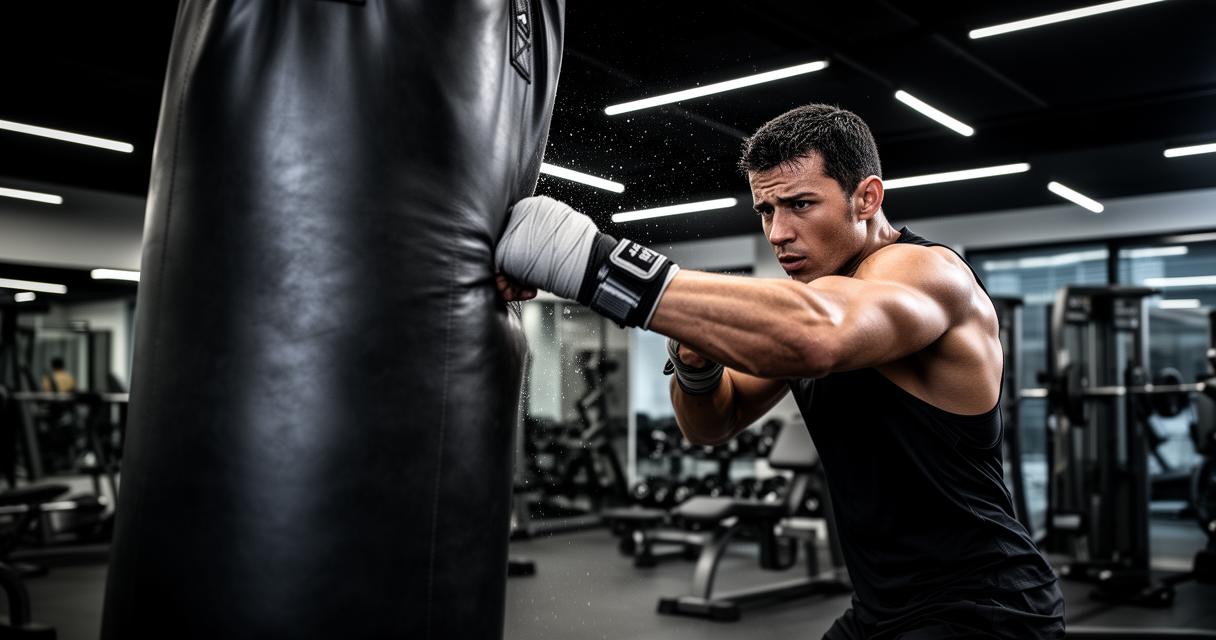
Mastering different punches and combination sequences
Combination sequences transform isolated punches into a cohesive offensive strategy, challenging both your physical and mental faculties. Practise combinations in timed rounds, typically lasting two to three minutes, followed by short recovery periods to simulate the structure of an actual fight. During these rounds, focus on maintaining rhythm and fluidity, allowing each punch to set up the next without hesitation. For example, a four-punch combination might begin with a jab to measure distance, followed by a cross to penetrate the guard, a lead hook to exploit the opening, and a rear uppercut to finish with authority. As you become comfortable with pre-set patterns, experiment with improvisation, responding to the bag's movement as if it were an opponent adjusting strategy mid-round. This adaptability is crucial for improving timing and coordination, as it trains your nervous system to react instinctively under pressure. Over time, your combinations will become sharper, faster and more varied, reflecting the technical growth that defines advanced heavy bag workouts.
Adjusting Speed and Power for Maximum Training Effectiveness
Adjusting the speed and power of your punches is a nuanced skill that elevates training effectiveness beyond mere repetition. Power development is not achieved by throwing every punch at maximum intensity, as this approach leads to fatigue and compromises technique. Instead, vary your output throughout the round: begin with lighter, faster strikes to establish rhythm and warm up the muscles, then progressively increase power as your body settles into the session. Reserve full-force punches for specific moments within the round, such as the final thirty seconds, when you channel all remaining energy into explosive combinations. This method not only conserves stamina but also trains your body to deliver peak power on demand, a critical attribute in competitive scenarios. Additionally, practising at different speeds sharpens your reflexes and timing improvement, as you learn to transition seamlessly between defensive positioning and offensive bursts. By consciously controlling your output, you transform each session into a strategic exercise that balances endurance training with explosive strength, ensuring comprehensive athletic development.
Enhancing athletic performance: full-body conditioning and equipment diversity
Heavy bag training is far more than an upper-body exercise; it engages the entire kinetic chain, from the ground up, demanding coordination, balance and strength from every muscle group. Integrating leg movements into your routine is essential for maintaining agility and generating the power that travels through your hips, torso and arms before culminating in a devastating strike. Effective bag work incorporates squats, lunges and pivots, movements that not only enhance lower-body strength but also improve cardiovascular fitness by elevating heart rate and calorie burning. A typical session might include three-minute rounds of continuous punching, interspersed with bodyweight exercises such as burpees, press-ups or planks. These exercises targeting the whole body build overall strength, ensuring that your conditioning extends beyond the specific demands of boxing to encompass functional fitness that supports daily activities and long-term health. Training regularly on the bag hones your fighting skills and improves performance, whilst also fostering mental discipline and resilience that translate into every aspect of life.
Integrating leg movements and whole-body strength exercises
Leg movements form the foundation of power generation in boxing, as force originates from the ground and travels upward through the body. To integrate these movements effectively, practise throwing punches whilst performing dynamic footwork drills, such as lateral shuffles or forward-backward steps. This synchronisation between lower and upper body not only improves coordination but also teaches you to harness momentum from your legs, amplifying the impact of each strike. Incorporate plyometric exercises, such as jump squats or bounding, to develop explosive power in the lower body, which translates directly to faster, more forceful punches. Additionally, core strengthening exercises, including Russian twists and bicycle crunches, stabilise the torso during rotational movements, ensuring that energy transfer remains efficient and controlled. By addressing the entire body in your training programme, you build a balanced, resilient athlete capable of sustaining high-intensity effort over extended periods. This holistic approach is central to the philosophy embraced by clubs that integrate heavy bag training into all class formats, recognising that true fitness transcends isolated muscle groups.
Utilising various bag types to diversify your training programme
Diversifying your training with different bag types introduces new challenges and prevents the monotony that can stall progress. The classic heavy bag, typically weighing between thirty and fifty kilograms, offers resistance suited to developing raw power and endurance. Speed bags, suspended at head height, demand rapid, rhythmic punching that sharpens hand-eye coordination and timing improvement. Double-end bags, anchored at both the top and bottom, rebound unpredictably, forcing you to adjust your positioning and strike with precision. Incorporating these variations into your routine not only keeps sessions engaging but also targets distinct aspects of boxing technique, from footwork coordination to reflexes and defensive awareness. Some facilities, including those expanding globally with locations in Singapore, Dubai and beyond, provide access to specialised equipment that caters to both beginners and seasoned athletes. By embracing equipment diversity, you ensure that your training remains progressive and comprehensive, building a skill set that adapts to any scenario within the sport. Regular exposure to varied challenges accelerates learning and reinforces the sustainable fitness habits that underpin long-term success in boxing and beyond.